
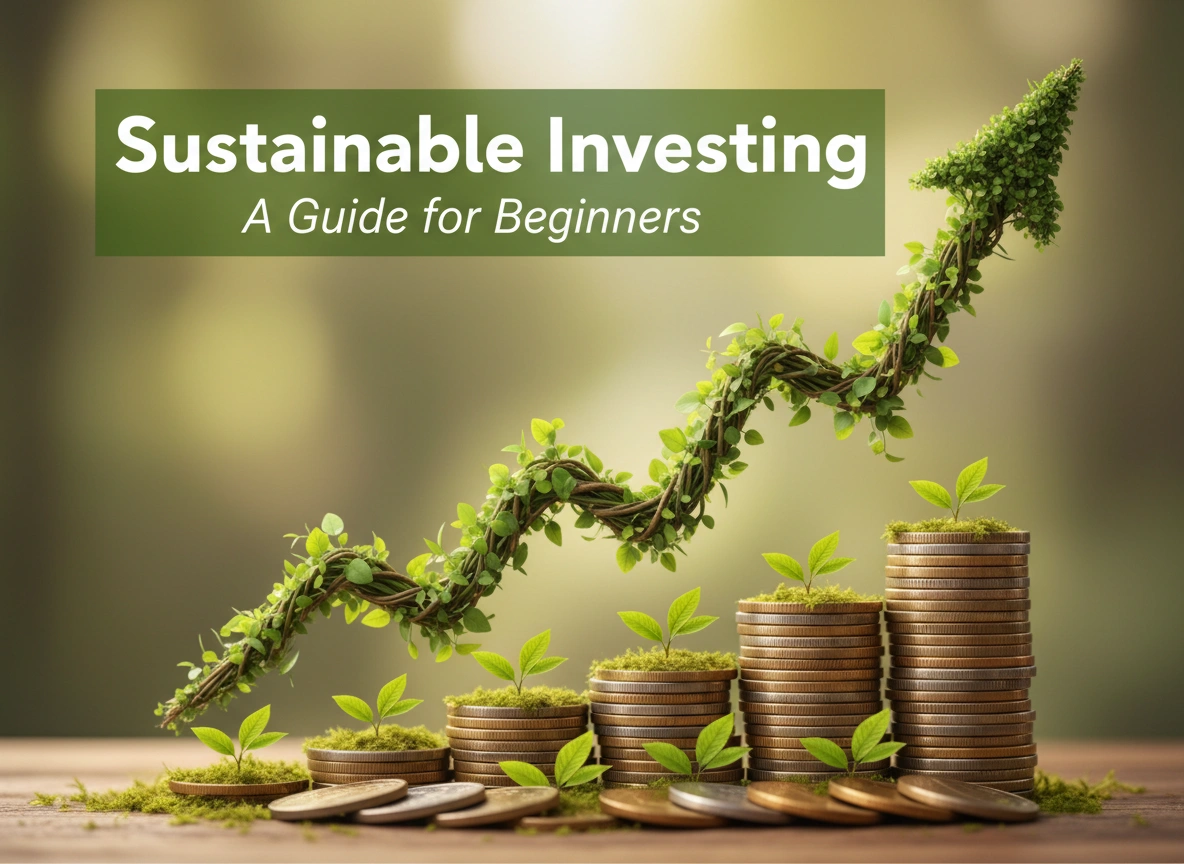
Money has power. For decades, the primary goal of investing was simple: maximize returns. You put money in, and you wanted more money out. How those returns were generated was often a secondary concern. But the landscape of finance is shifting. Investors are waking up to the reality that their portfolios don’t exist in a vacuum. Your investments can either support companies building a better future or those clinging to harmful practices.
Sustainable investing bridges the gap between financial ambition and personal values. It allows you to grow your wealth while supporting businesses that prioritize the planet and its people. If you are new to the concept, it might feel like navigating a maze of acronyms and buzzwords. This guide cuts through the noise to help you understand what sustainable investing is, why it matters, and how you can get started today.
What is Sustainable Investing?
Sustainable investing is an investment discipline that considers environmental, social, and corporate governance (ESG) criteria to generate long-term competitive financial returns and positive societal impact. It goes by many names—socially responsible investing (SRI), impact investing, or green investing—but the core philosophy remains the same: doing well by doing good.
This isn’t just about avoiding “sin stocks” like tobacco or weapons manufacturers anymore. It is a proactive approach. It identifies companies that are leaders in sustainability, whether that means reducing carbon footprints, ensuring fair labor practices, or maintaining transparent leadership. The importance of this shift cannot be overstated. As climate change accelerates and social inequalities widen, capital markets play a crucial role in driving the solutions we need. By directing funds toward responsible companies, investors signal to the market that sustainability is a priority, not an afterthought.
The Key Principles: Decoding ESG
To practice sustainable investing effectively, you need to understand the framework that underpins it. The industry standard for evaluating a company’s sustainability is ESG. These three pillars help investors look beyond the balance sheet to assess risks and opportunities that traditional financial analysis might miss.
Environmental (E)
This pillar looks at a company’s impact on the natural world. It asks critical questions about resource management and ecological stewardship.
- Climate Change: What is the company’s carbon footprint? Do they have a plan to reach net-zero emissions?
- Resource Use: How efficiently do they use water and energy? Are they reducing waste?
- Pollution: Does their production process release toxic chemicals or excessive plastic waste?
Social (S)
The social pillar focuses on people and relationships. It evaluates how a company treats its employees, customers, and the communities where it operates.
- Labor Standards: Are workers paid a living wage? Are working conditions safe?
- Diversity and Inclusion: Is the workforce diverse? meaningful representation in leadership?
- Community Impact: Does the company support local communities, or does its presence cause displacement and harm?
Governance (G)
Governance deals with how a company is run. It examines the internal system of practices, controls, and procedures.
- Executive Pay: Is executive compensation tied to sustainable performance, or is it excessive compared to average worker pay?
- Board Diversity: Is the board independent and diverse?
- Transparency: Is the company honest about its accounting and lobbying efforts? Is there a history of corruption or bribery?
Why Choose Sustainable Investing? The Benefits
The old myth that you have to sacrifice returns to invest sustainably has been largely debunked. In fact, sustainable investing offers distinct advantages that can strengthen your portfolio.
Risk Mitigation: Companies with strong ESG practices are often better managed and less risky. A company that ignores environmental regulations faces potential fines and lawsuits. A company with poor labor practices risks strikes and reputational damage. By avoiding these laggards, you protect your portfolio from sudden shocks.
Long-Term Performance: Many sustainable funds have performed as well as, or better than, traditional funds over the last decade. Companies that innovate to solve environmental problems are positioning themselves for future growth in a green economy.
Personal Alignment: There is a psychological benefit to knowing your money isn’t funding things you morally oppose. It feels good to know your savings are helping to build renewable energy infrastructure rather than funding new oil pipelines.
The Challenges You Might Face
While the benefits are clear, sustainable investing is not without its hurdles. Beginners should be aware of these challenges to navigate them effectively.
Greenwashing: This is perhaps the biggest risk. Greenwashing occurs when a company or fund markets itself as environmentally friendly but doesn’t actually have the data or practices to back it up. A fund might have “Sustainability” in its name but still hold significant shares in fossil fuel companies.
Data Inconsistency: Unlike financial data, which is standardized (revenue, profit, debt), ESG data can be subjective. Different rating agencies might give the same company different scores based on what criteria they prioritize.
Limited Options in Some Sectors: Depending on how strict your criteria are, you might find it hard to diversify into certain sectors like heavy industry or energy, which are traditionally less sustainable.
How to Start Your Journey: A Step-by-Step Guide
Ready to align your wallet with your values? Here is a practical roadmap to get you started.
Step 1: Define Your Values
Sustainability means different things to different people. What matters most to you?
- Are you passionate about fighting climate change?
- Do you care deeply about gender equality in the workplace?
- Are you focused on animal welfare?
Clarifying your priorities will help you choose the right investment products. You don’t have to save the whole world at once; focus on the areas where you want to make the biggest impact.
Step 2: Do Your Homework
Once you know what you care about, research is vital. Don’t take a fund’s name at face value. Look at the fund’s prospectus or “holdings” list.
- Use Rating Tools: Websites like Morningstar and MSCI offer ESG ratings for funds and stocks. These tools can give you an objective look at how sustainable a fund really is.
- Check the Strategy: Does the fund use “negative screening” (excluding bad companies) or “positive screening” (including only the best)? Negative screening is easier but less impactful. Positive screening actively seeks out leaders.
Step 3: Choose Your Vehicle
You have two main ways to invest sustainably:
- Individual Stocks: You can buy shares in specific companies you believe in, like a solar panel manufacturer or an electric vehicle maker. This gives you total control but requires more research and carries higher risk if that single company fails.
- ETFs and Mutual Funds: For most beginners, Exchange Traded Funds (ETFs) or mutual funds are the safer bet. These bundle hundreds of companies together. Look for funds labeled “ESG,” “SRI,” or “Sustainable.” This provides instant diversification.
Step 4: Start Small and Monitor
You don’t need to overhaul your entire portfolio overnight. You can start by allocating a small percentage of your monthly contribution to a sustainable fund. As you become more comfortable, you can increase this amount.
Remember to monitor your investments. Companies change. A business that is a leader today might face a scandal tomorrow. Review your holdings once or twice a year to ensure they still align with your values.
Examples of Sustainable Investment Opportunities
To make this concrete, let’s look at a few examples of sectors and themes that are popular in sustainable investing right now.
Renewable Energy: This is the most obvious category. Investing in companies that produce wind turbines, solar panels, or battery storage technology directly supports the transition away from fossil fuels. The impact here is measurable in tons of CO2 avoided.
Water Technology: Water scarcity is a growing global crisis. Companies that develop water filtration systems, efficient irrigation technology, or wastewater treatment solutions are critical for the future. Investing here supports the preservation of our most precious resource.
Green Real Estate: Buildings account for a massive chunk of global emissions. Green Real Estate Investment Trusts (REITs) focus on owning and managing buildings that are energy-efficient, LEED-certified, and built with sustainable materials.
Social Impact Bonds: These are more niche but interesting. They are contracts with the public sector in which a commitment is made to pay for improved social outcomes that result in public sector savings. For example, a bond might fund a program to reduce recidivism rates among former prisoners.
Conclusion
Sustainable investing is more than just a trend; it is a necessary evolution of capitalism. It acknowledges that financial value and social value are inextricably linked. By choosing to invest sustainably, you are taking a stand. You are saying that how money is made matters just as much as how much is made.
As a beginner, the most important step is simply to start. You don’t need to be perfect. You don’t need to find the one “perfect” fund that solves every global problem. Every dollar you move into a sustainable strategy is a dollar that is working harder for the future you want to see. Start with your values, do your research, and watch your wealth grow alongside a better world.
Please click here for more info.


