
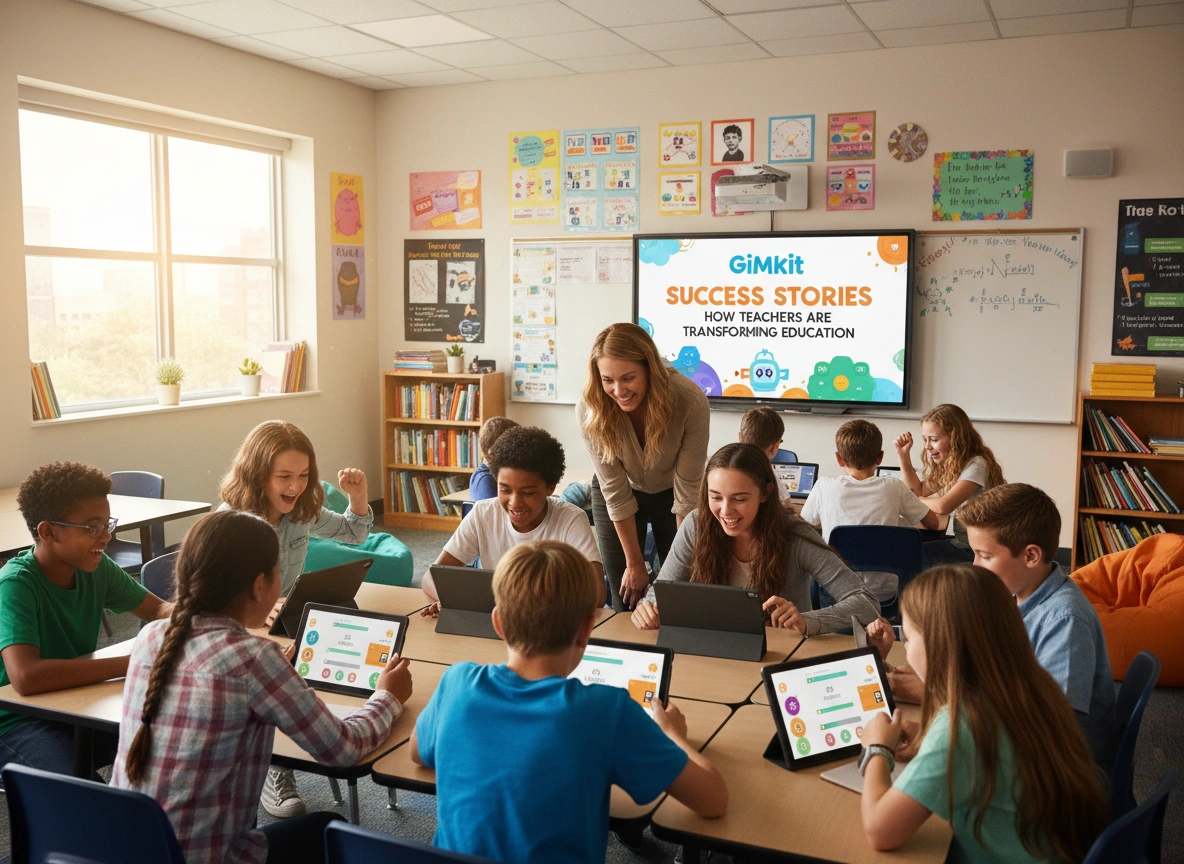
Student engagement remains one of the most persistent challenges in modern classrooms. Every teacher knows the struggle of looking out at a sea of glazed-over eyes during a review session. While technology has promised to fix this for decades, few tools actually bridge the gap between entertainment and rigorous assessment. Gimkit, a live learning game show platform, is one of the rare exceptions that has managed to capture the attention of students while delivering actionable data to teachers.
This article explores how educators across various disciplines are leveraging Gimkit to transform their classrooms. We will examine real-world success stories, dissect the specific mechanics that drive engagement, and look at innovative strategies teachers are using to turn assessment into a student-favorite activity.
Beyond the Buzz: Why Gimkit Resonates
Before diving into specific classroom victories, it is essential to understand why this platform stands out in a crowded EdTech market. Created by a high school student, Josh Feinsilber, Gimkit was built from a learner’s perspective. Unlike traditional quiz tools where speed is the only variable, Gimkit introduces strategy. Students earn in-game currency for correct answers, which they can invest in upgrades and power-ups. This economic layer adds depth, keeping students engaged even if they aren’t the fastest in the class.
The Mechanics of Motivation
The success of Gimkit lies in its ability to cater to different types of learners simultaneously:
- The Competitor: Motivated by the leaderboard and beating peers.
- The Strategist: Focused on optimizing income and buying the right upgrades.
- The Collaborator: Thrives in team modes like “Trust No One” or “Floor is Lava.”
By blending these elements, teachers report that assessments feel less like testing and more like a community event.
Case Study: Revitalizing World Language Classrooms
Language acquisition requires repetition. Vocabulary drills are necessary, yet they are often the most tedious part of learning a new language. Sarah, a high school Spanish teacher from Texas, found her students dreading vocabulary days. Retention was low, and enthusiasm was non-existent.
The Strategy: “KitCollab” for Ownership
Sarah shifted from teacher-created quizzes to student-generated content using the “KitCollab” feature. In this mode, students submit their own questions based on the week’s vocabulary list. Sarah vets them in real-time, and the class plays a game built by their peers.
“The shift was immediate,” Sarah reports. “Students weren’t just memorizing definitions; they were trying to write tricky questions to stump their friends. They were engaging with the material at a higher level of Bloom’s Taxonomy—creating rather than just remembering.”
The Outcome
Over a single semester, Sarah tracked assessment scores. Classes using Gimkit for weekly review saw a 15% increase in vocabulary retention scores compared to classes using traditional flashcards. More importantly, student surveys indicated a massive jump in enjoyment. Vocabulary day went from the most dreaded day of the week to the most anticipated.
Turning Math Anxiety into Math Confidence
Mathematics often induces high levels of anxiety. The pressure to be correct and fast can paralyze students who struggle with foundational concepts. Mark, a middle school math teacher in Ohio, used Gimkit to dismantle this anxiety.
The Strategy: Infinite Repetition Without Shame
In a standard quiz, getting a question wrong is a permanent mark on a grade. In Gimkit, questions repeat. If a student misses a question about solving for X, they see the correct answer, and they know they will see that question again soon. This creates a low-stakes environment for failure.
Mark utilized the “Infinity Mode,” where the game doesn’t end until a collective monetary goal is reached. He paired this with specific power-ups that allowed struggling students to earn more per question as they built streaks.
The Impact on Special Education Students
Mark noted a profound impact on his students with Individualized Education Programs (IEPs). “Because the questions cycle back, my students who need more repetition get it naturally without feeling singled out,” Mark explains. “They see the question, they miss it, they learn, and two minutes later, they get it right. That immediate redemption arc builds confidence that a paper worksheet never could.”
Gamifying History: The “Trust No One” Simulation
History is often taught as a series of dates and names, but it is actually a study of human behavior, alliances, and betrayal. James, a social studies teacher, used Gimkit’s “Trust No One” mode—a social deduction game similar to Among Us—to teach about the Cold War.
The Strategy: Paranoia as Pedagogy
James customized the question set to cover Cold War terminology and key figures. However, the gameplay mechanics of finding the “impostors” mirrored the paranoia of the Red Scare and McCarthyism.
During the game, students had to answer content questions to earn the ability to investigate peers. The game became a living simulation of the historical atmosphere they were studying.
The Result: Deep Conceptual Understanding
Discussions following the game were rich and nuanced. Students understood the tension and suspicion of the era because they had just experienced a micro-version of it. “It moved the lesson from abstract to concrete,” James noted. “They understood why people turned on their neighbors because they felt that same suspicion in the game.”
Innovative Teaching Strategies for Any Classroom
The success stories above highlight that Gimkit is flexible enough for any subject. Here are three innovative strategies educators are using to maximize the platform’s potential:
1. The Pre-Test Diagnostic
Instead of a boring paper pre-test, use a short Gimkit session to gauge prior knowledge. The “Student Reports” feature provides a detailed breakdown of which concepts the class already understands and which need deep instruction. This allows for data-driven lesson planning that respects the teacher’s time.
2. Homework That Actually Gets Done
Gimkit allows teachers to assign “Assignments” that can be played asynchronously. Unlike standard homework worksheets, these assignments have a clear completion goal (e.g., earn $1,000 in-game cash). Students can play as many times as they need to reach the goal, guaranteeing they get the practice they need without the frustration of hitting a wall on a single difficult problem.
3. The “Boss Battle” Review
For exam prep, teachers can set up a “Boss Battle” where the teacher plays against the entire class. The teacher (the Boss) has higher earning power, but the students have numbers on their side. This unites the class toward a common goal—beating the teacher—fostering a strong sense of community and collaboration.
Overcoming Challenges and Best Practices
While Gimkit is powerful, it is not magic. Successful implementation requires thoughtful planning.
Managing the “Gamer” Mindset
Some students may focus too heavily on the shop and upgrades, neglecting the questions. To combat this, teachers should use the “Answer Check” feature, which prevents students from buying upgrades if their accuracy drops below a certain percentage. This ensures that content mastery remains the primary mechanic for success.
Balancing Screen Time
Gimkit is high-energy. Using it every day can lead to burnout or overstimulation. The most successful teachers use it as a strategic tool—a punctuation mark on a lesson unit rather than the entire sentence. It works best as a bell-ringer, a mid-class energy booster, or a formative assessment closer.
The Future of Assessment
The success stories surrounding Gimkit point to a larger shift in education. We are moving away from assessment as a static “autopsy” of learning (checking what students know after the fact) toward assessment as a dynamic part of the learning process itself.
When a student plays Gimkit, they are being assessed, but they are also learning through repetition and immediate feedback. They are strategizing, collaborating, and engaging with content in a way that feels relevant to their digital-native lives.
Conclusion
Gimkit has proven to be more than just a distraction or a time-filler. In the hands of creative educators, it is a sophisticated tool for differentiation, engagement, and data collection. Whether it is Sarah boosting Spanish vocabulary retention, Mark building math confidence, or James simulating historical tension, teachers are finding that gamification—when done right—leads to serious learning.
By integrating strategy, repetition, and a bit of friendly competition, Gimkit allows teachers to meet students where they are. The result is a classroom where assessment is not feared, but welcomed.
Actionable Next Steps
If you are ready to integrate Gimkit into your classroom, start with these steps:
- Start Small: Run a simple “Classic” mode game for 10 minutes at the end of a unit to familiarize students with the mechanics.
- Analyze the Data: After the first game, look at the report. Identify the three questions students missed the most and use them as your bell-ringer for the next day.
- Empower Students: Try the “KitCollab” feature. Ask students to submit one question each about the current topic and play the game they built.
Please visit this website for more info.


