
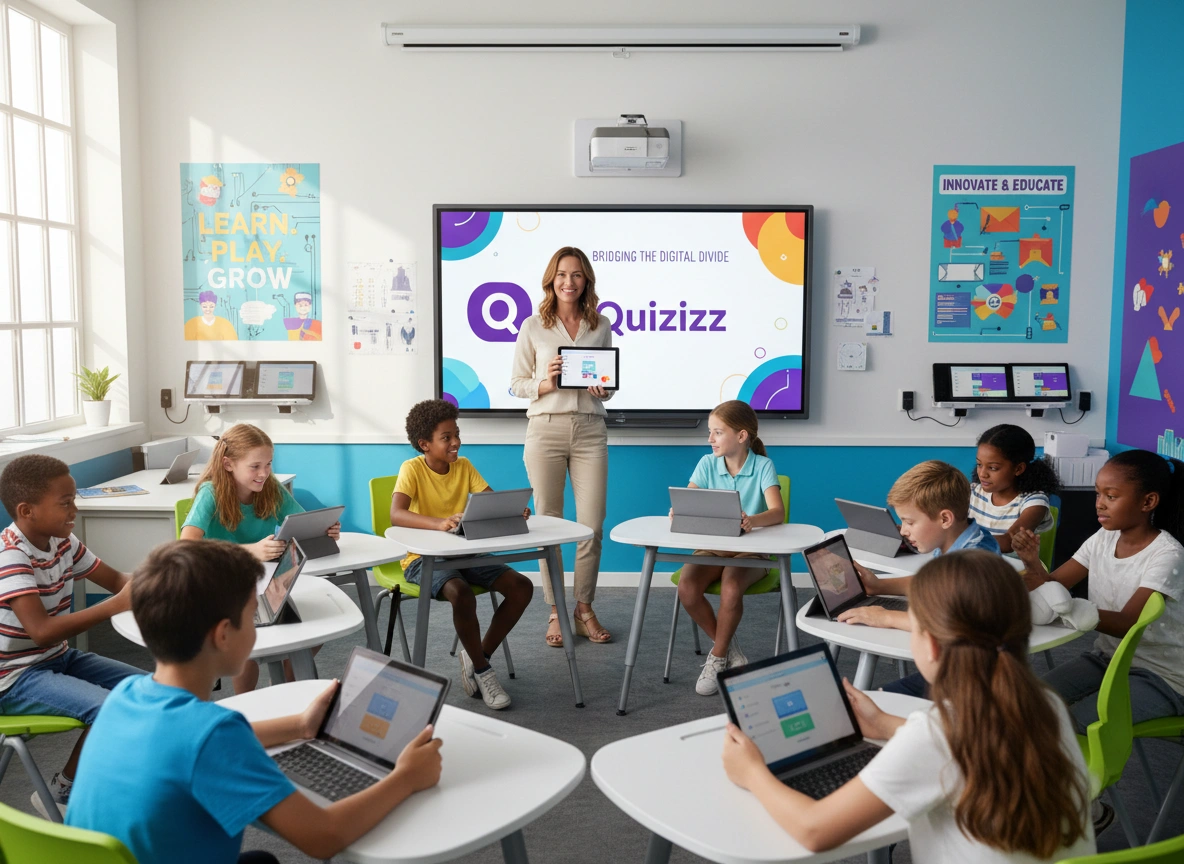
Education technology, or “EdTech,” often arrives in classrooms with a promise of revolution. Administrators tout new software as the solution to student disengagement, while tech companies promise seamless integration. Yet, for many educators standing at the front of the room, the reality feels different. New tools often mean steep learning curves, clunky interfaces, and hours spent troubleshooting instead of teaching. This friction—the gap between the promise of technology and its practical application—is where many EdTech initiatives fail.
However, some platforms have managed to crack the code, moving beyond mere functionality to become genuinely beloved tools in a teacher’s arsenal. Quizizz stands out as a prime example of this success. By prioritizing user experience, gamification, and actionable data, Quizizz has become a gateway for hesitant educators to not just use technology, but to embrace it fully.
This article explores how Quizizz is transforming the classroom experience. We will examine the features that make it accessible, how it drives student engagement through gamification, and the way it provides teachers with data-driven insights without adding to their administrative burden. Ultimately, we will see how Quizizz serves as a model for effective EdTech integration.
The Barrier to Entry: Why Teachers Resist New Tech
Before understanding the success of Quizizz, we must acknowledge the hurdles teachers face. The modern educator is often overworked and under-resourced. When a new digital tool is introduced, the immediate question isn’t “Is this cool?” but rather “Will this save me time, or cost me time?”
Resistance to EdTech usually stems from three main pain points:
- Complexity: Tools that require extensive training or complex setups are often abandoned.
- Reliability: If a tool crashes or lags during a lesson, it disrupts the flow of learning and undermines teacher authority.
- Relevance: Tech that feels like a distraction rather than a pedagogical aid is quickly dismissed as a gimmick.
Quizizz addresses these friction points directly by offering a platform that is intuitive, stable, and pedagogically sound. It doesn’t ask teachers to reinvent the wheel; it simply makes the wheel roll smoother.
Simplicity by Design: The “Zero-Training” Approach
One of the primary reasons Quizizz helps teachers embrace EdTech is its remarkably low barrier to entry. Unlike complex Learning Management Systems (LMS) that might require days of professional development workshops, a teacher can set up a Quizizz account and launch their first activity in under ten minutes.
Intuitive Interface
The platform’s design mimics the consumer apps teachers use in their daily lives. The dashboard is clean, navigation is straightforward, and the process of creating a quiz is linear. This “consumer-grade” user experience is crucial. When a tool feels familiar, anxiety decreases. Teachers who might describe themselves as “technologically challenged” find that they can navigate Quizizz with confidence.
The Power of the Library
Perhaps the most significant time-saver is the Quizizz library. Teachers do not always need to create content from scratch. They have access to millions of teacher-created quizzes and lessons covering every subject and grade level.
- Search and Edit: A math teacher needing a quick check for understanding on “quadratic equations” can search the library, find a highly-rated quiz, copy it to their own profile, and edit specific questions to match their curriculum.
- Teleport Feature: This unique feature allows educators to “teleport” questions from other quizzes into their own, assembling a custom assessment in seconds rather than hours.
By reducing the preparation time, Quizizz proves its value immediately. It shifts the narrative from “tech is a burden” to “tech is an assistant.”
Gamification: Turning Assessment into Engagement
Engagement is the currency of the classroom. When students are engaged, behavior management issues decrease, and retention rates increase. Quizizz leverages gamification mechanics—elements typically found in video games—to transform standard assessments into interactive experiences.
The Difference Between Testing and Playing
Traditional quizzes often induce anxiety. They are high-stakes, solitary, and stressful. Quizizz flips this dynamic.
- Avatars and Themes: Students can choose fun avatars, and the interface uses bright colors and lively animations.
- Leaderboards: A real-time leaderboard creates a sense of friendly competition. Crucially, teachers can toggle this feature on or off depending on the classroom dynamic, ensuring competition remains healthy rather than discouraging.
- Memes and Power-ups: Correct answers might be rewarded with a funny meme or a “power-up” that gives a student a second chance at a question or a score multiplier.
Student-Paced Learning
Unlike other interactive quiz platforms where the whole class must answer at the same speed (often projected on a central screen), Quizizz allows for student-paced participation. Students see the questions and answers on their own devices. This is a subtle but powerful feature for inclusivity.
- Reduced Pressure: Students who need more time to process reading or do calculations aren’t rushed by a countdown timer on the main board.
- Focus on Accuracy: While speed is rewarded, accuracy is paramount. This structure supports diverse learners, including those with processing delays or anxiety.
When teachers see their students excited to take a quiz—asking, “Can we play again?”—the hesitation to use technology evaporates. The results speak for themselves.
Data-Driven Instruction Without the Spreadsheet Fatigue
For EdTech to be truly useful, it must do more than entertain; it must inform instruction. Collecting data is easy, but analyzing it is time-consuming. Quizizz automates the analysis, providing teachers with instant, actionable insights.
Real-Time Feedback
As students play, teachers receive a live dashboard view. They can see instantly:
- Which questions are tripping up the majority of the class.
- Which students are struggling significantly.
- The overall accuracy rate of the lesson.
This allows for immediate intervention. If 80% of the class misses question #4, the teacher can pause the game and reteach that specific concept right then and there. This is “formative assessment” in its purest, most effective form.
Post-Game Reports
After the session, Quizizz generates detailed reports that can be saved, printed, or emailed to parents. These reports break down performance by student and by question standard.
- Identifying Gaps: A teacher can look at the “Question View” to see that while the class understands vocabulary, they are struggling with application.
- Parent Communication: Instead of a vague email stating a student is falling behind, a teacher can send a PDF report showing exactly where the student excelled and where they need support.
By automating the grading and analysis process, Quizizz returns hours to the teacher—hours that can be spent on lesson planning or one-on-one student support.
Integration and Versatility: Meeting Teachers Where They Are
A common frustration with EdTech is the “silo effect,” where tools don’t talk to one another. Quizizz actively works to dismantle these silos through robust integrations.
Seamless LMS Connection
Quizizz integrates with major Learning Management Systems like Google Classroom, Canvas, and Schoology.
- Rostering: Teachers don’t need to manually input student names; they can import rosters directly.
- Gradebook Sync: When a student completes a quiz, the grade is automatically pushed to the LMS gradebook. This eliminates the tedious task of manual data entry, a major pain point for educators.
Modes for Every Scenario
Flexibility is key to adoption. Quizizz recognizes that teaching happens in various contexts.
- Live Mode: Perfect for in-class energy and group reviews.
- Homework Mode: Allows students to complete assignments on their own schedule, with a deadline set by the teacher.
- Paper Mode: Recognizing that not every classroom has 1:1 devices, Quizizz introduced “Paper Mode.” Teachers project the question, and students hold up QR codes printed on paper to answer. The teacher scans the room with their phone to record responses instantly. This bridge between high-tech software and low-tech environments is critical for equity and widespread adoption.
Conclusion
The skepticism many teachers feel toward EdTech is often justified by past experiences with clumsy, ineffective tools. However, the narrative changes when technology is designed with empathy for the educator’s workload and the student’s experience.
Quizizz is helping teachers embrace EdTech not by forcing compliance, but by providing genuine value. It respects the teacher’s time through its library and integrations. It respects the student’s need for engagement through gamification. And it respects the pedagogical process through actionable data.
For educators looking to integrate more technology into their practice, Quizizz offers a safe, effective, and enjoyable starting point. It proves that digital tools, when designed correctly, don’t replace the teacher—they amplify their impact.
Actionable Next Steps
If you are an educator looking to leverage Quizizz in your classroom:
- Create a Free Account: Sign up and explore the interface.
- Use the Search Function: Don’t build from scratch. Search for a topic you are teaching next week and find a pre-made quiz.
- Try “Paper Mode”: If device availability is an issue, print the QR cards and try a low-tech version of the game.
- Review the Reports: Run one live session and spend five minutes looking at the post-game data to see how it can inform your next lesson.
Please vist this website for more info


